



Homeopathy
Introduction What Is Allopathy? Allopathy, or conventional medicine, is based on the principle of opposites — using drugs or surgeries...
Read More →
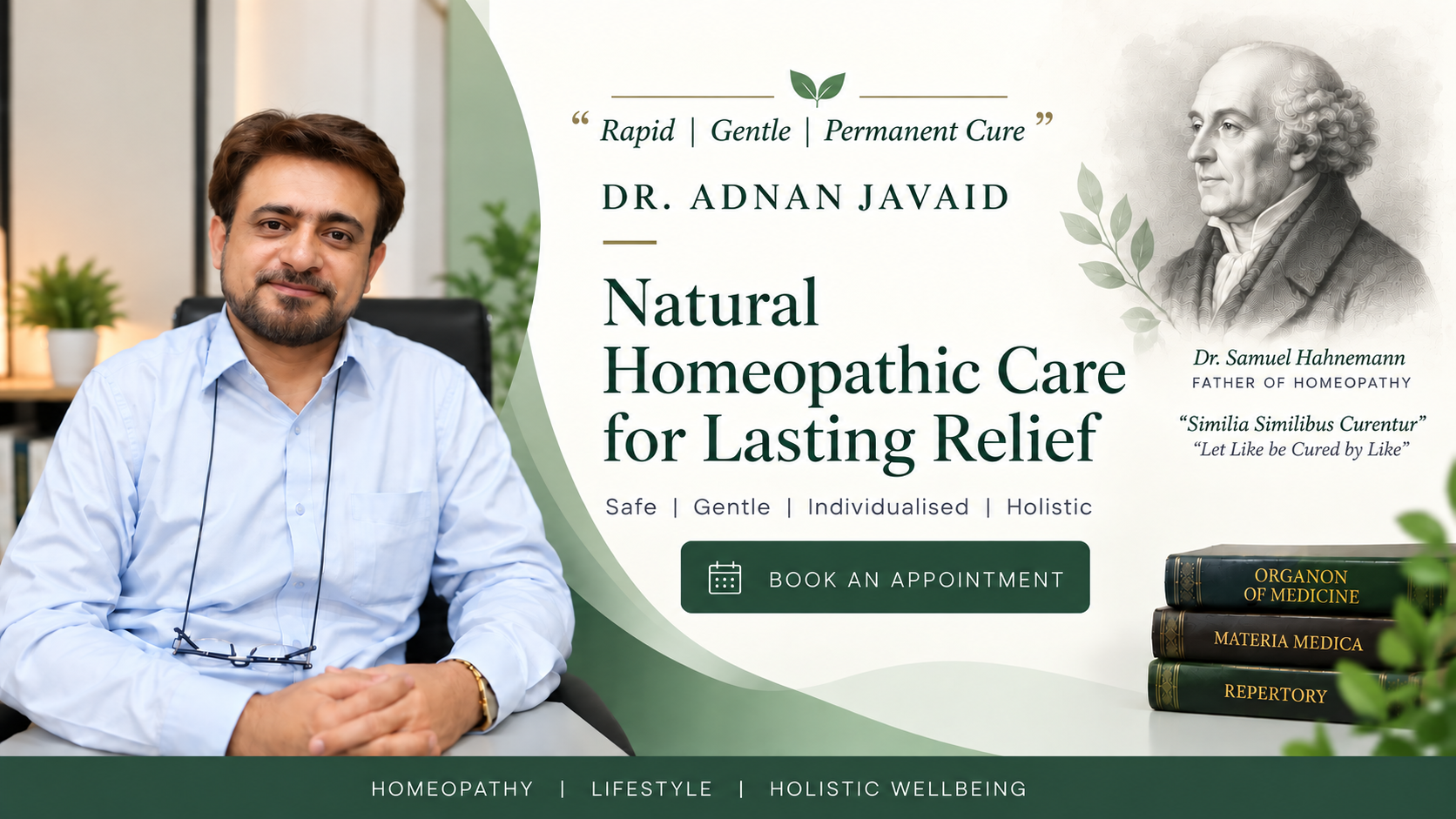
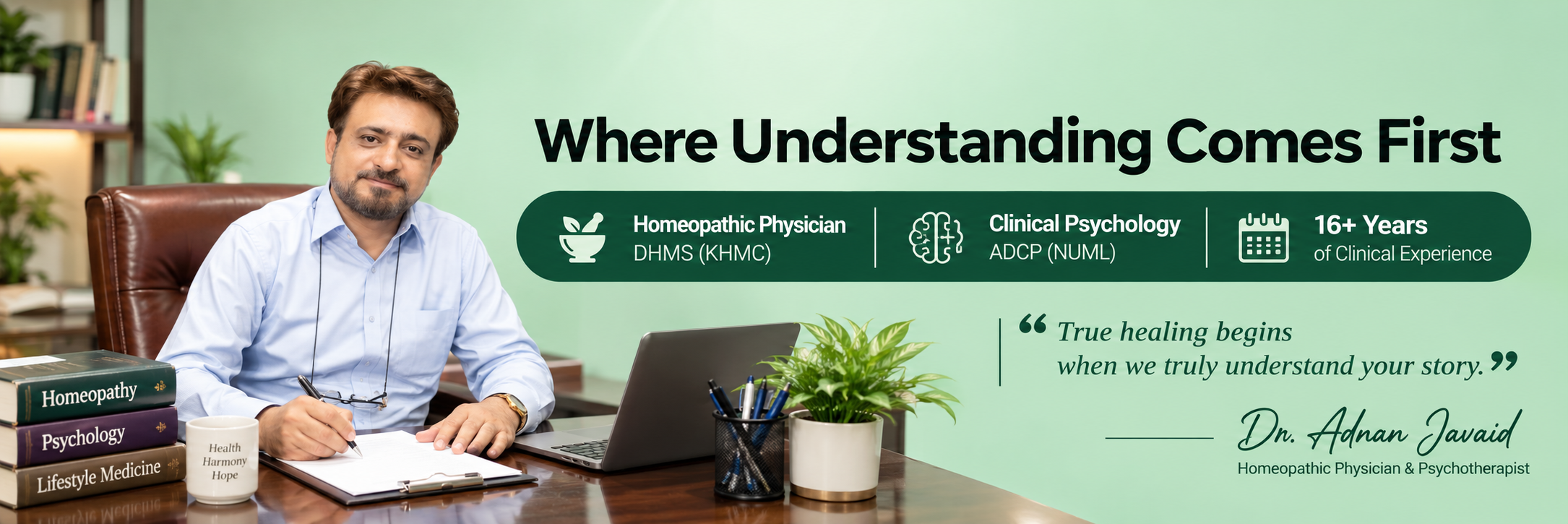
True healing begins with a deeper understanding of the mind and body, and the lifestyle that shapes both.
With a background in Clinical Psychology and Classical Homeopathy, the right approach has gradually taken shape, one that is holistic, principle-based, and focused on clarity, alignment, and lasting results in modern healthcare.
An approach shaped by real experience focused on rapid, gentle, and permanent outcomes through personalized care for men, women, and children, integrating clinical psychology with lifestyle and dietary guidance.
— Adnan Javaid
EXCELLENTTrustindex verifies that the original source of the review is Google. I have been consulting Dr. Adnan since my 9th grade, and now, even as an MBBS doctor myself, I continue to trust him for everything — from something as simple as a flu to more complex issues like hormonal imbalances and conception difficulties. Ever since I started his homeopathic treatment, I haven’t needed antibiotics at all. His medicines work like magic — gentle yet incredibly effective — and they truly dispel the myth that homeopathy is a slow form of treatment. Dr. Adnan’s deep understanding, compassionate care, and consistently remarkable results have made me believe in the power and precision of homeopathy more than everPosted onTrustindex verifies that the original source of the review is Google. ہم ڈاکٹر عدنان کے دل سے شکر گزار ہیں۔ آپ کی پیشہ ورانہ مہارت، سمجھداری، درست تشخیص، اور عین مسئلے کے مطابق دوائی تجویز کرنے کی صلاحیت سے ہماری بیٹی کو اسپتال کے تکلیف دہ مراحل سے بچنے کا موقع ملا۔ یہ حقیقت ہے کہ جب کسی معالج کی تحقیق، محنت اور لگن خلوصِ نیت سے مزین ہو، تو علاج کی پہلی ہی خوراک واضح راحت اور افاقہ عطا کرتی ہے۔ در اصل، ہم نے بخار بگڑنے کے بے شمار واقعات اپنی آنکھوں سے دیکھے ہیں ۔ یہ ایک طوفان کی طرح آتا ہے اور غیر متوقع تباہی مچا کر چلا جاتا ہے۔ عائشہ کے ساتھ لیاقت نیشنل کے آئی سی یو میں گزرے ہوئے وہ 11 دن آج بھی ذہن میں نقش ہیں،جب لوگ مختلف ہسپتالوں سے لاپرواہی کہ نتیجے میں وہاں آۓ، کس طرح ایک بخار 7 سے 15 دن حتیٰ کہ ایک مہینہ تک بھی قابو سے باہر رہ سکتا ہے۔ اسی لیے ہم بہت ڈر گۓ تھے کیونکہ بخار 105 تک پہنچ گیا تھا۔ آپ کی بےمثال حکمتِ عملی سے محض آدھے سے ایک گھنٹے میں بخار 102 پہ آیا اور پھر بتدریج کم ہوتے ہوۓ اگلے دن دوپہر کو ختم ہو گیا۔ اور وہ بھی ہومیوپیتھی سے جسکی وسعت اور برتری سے دنیا آج بھی نہ واقف ہے۔ یہ آپ کی خلوصِ نیت اور لگن کی انتہا ہے کہ آپ اپنے امتحانات کے دنوں میں بھی ہر وقت رابطے میں رہے۔ ڈاکٹر صاحب، آپ کی توجہ اور محنت واقعی قابلِ تعریف ہے۔Posted onTrustindex verifies that the original source of the review is Google. An outstanding physcatrist and homoeopathic Dr with absolute level of knowledge and experience.Posted onTrustindex verifies that the original source of the review is Google. Doctor Adnan is our family doctor and we find him a best diagnostic doctor his research in his homeopathic field is exact and gives a long healthy life to our family from my son's fits problem to my diabetes issues and today even if my company gives me free medical facility, I prefer to take homeopathic medication prescribed by doctor Adnan.At last, I must say in regards East or west doctor Adnan is the best! Me Zeeshan haider a well wisher of doctor Adnan javed meer Thank you sir.Posted onTrustindex verifies that the original source of the review is Google. I have been a patient of Dr. Adnan for the past 15 years, and during this time, he has been an exceptional healer for me and my entire family. His expertise in homeopathy, coupled with his deep understanding of individual health concerns, has helped us recover from various illnesses—ranging from minor illnesses to chronic conditions and even urgent medical situations. Over the years, he has diagnosed, treated, and successfully cured countless cases, making it difficult to list them all. I can confidently say that for the past 15 years, my wife, six children, and I have never needed to seek medical care from any other homeopath or conventional doctor, except for some machine observation & lab tests. His treatments have not only provided immediate relief but have also addressed the root causes, ensuring long-term wellness. His ability to manage chronic illnesses is truly remarkable where conventional treatments failed or provided only temporary relief, his homeopathic remedies have led to lasting recovery. One of the things that sets Dr. Adnan apart is his compassionate and patient-centered approach. He takes the time to listen carefully, understand the symptoms, and consider all aspects of health before recommending a treatment. His holistic approach has strengthened our immunity, reduced our dependency on allopathic medicines, and improved our overall quality of life. Beyond regular treatments, He has been a doctor for emergency cases as well. Be it sudden fevers, food poisoning, viral infections, or injuries, his quick response and precise homeopathic remedies have always helped us recover rapidly. His solid support and availability during critical times have given us immense confidence in his treatment. I truly believe that he is the best homeopath one could ask for. His experience, knowledge, and dedication to his patients make him an outstanding doctor and a trusted family health advisor. My family and I are forever grateful for his care, and I wholeheartedly recommend him to anyone seeking long-term healing and wellness through homeopathy.Posted onTrustindex verifies that the original source of the review is Google. Mery bety k hath ka masks that us k pathy kamzoor thy r hath sedha nai hota tha making in ki medicine lent sy us ki 50% improve ho gia hyPosted onTrustindex verifies that the original source of the review is Google. I would like to express my deepest gratitude to Dr. Adnan Javed for his exceptional expertise and dedication in treating my son, Huzaifa Zulqarnain. My son was suffering from a sudden, severe tooth infection that led to intense pain, significant swelling on the left side of his face, high fever, and dangerously low blood pressure. It was an alarming situation, and we were deeply concerned about his well-being. Dr. Adnan Javed’s prompt and precise homeopathic treatment not only provided immediate relief but also ensured a smooth recovery without any complications. His deep understanding of homeopathy, keen observation, and compassionate approach truly set him apart as a remarkable healer. We are immensely thankful for his tremendous efforts and unwavering support during this challenging time. His dedication to patient care is truly commendable, and we feel fortunate to have had him as our trusted homeopath.Posted onTrustindex verifies that the original source of the review is Google. Doctor Adnan is the most competent Doctor in homeopathy i had ever seen with a high patient satisfaction rate. May Allah bless him.Posted onTrustindex verifies that the original source of the review is Google. My condition was so bad 2 months ago..i was in depression and i have alot of physical problems as well Dr adnan helps me in my depression and my physical health is also getting better day by day..he has been a good doc and a good friend as well to me ..Posted onTrustindex verifies that the original source of the review is Google. Dr Adnan has been extremely helpful whenever I have contacted him and he definitely has a lot of knowledge when it comes to illnesses and what to give. Highly recommended!

Discuss your health concerns via WhatsApp, call or in person.
We understand your complete medical, mental and lifestyle history.
Based on your unique case, a tailored homeopathic treatment plan.
Regular follow ups to monitor progress and ensure lasting results.
Based on Dr. Adnan’s Extensive Research and Vast Experience


Learn, stay informed and take charge of your health.
Homeopathic care may be considered for many chronic health concerns, depending on the individual case, symptoms, medical history, and overall health. Each case is assessed individually rather than assuming that the same medicine is suitable for everyone with the same diagnosis.
Yes, homeopathic consultation can also be considered for acute health concerns. The appropriate approach depends on the nature and severity of the symptoms, and urgent or serious conditions should always receive prompt medical assessment.
There is no fixed timeframe because every case is different. Acute and chronic conditions may respond differently, and the response depends on factors such as the nature of the condition, its duration, previous treatment, and the individual’s overall health.
No. You should not stop, reduce, or change prescribed medication on your own. During consultation, provide complete information about your current medicines and treatments so that your overall situation can be considered appropriately.
In some situations, people seek homeopathic care while continuing conventional treatment. However, treatment decisions should be made carefully, particularly for serious or ongoing medical conditions, and prescribed medicines should never be stopped without guidance from the relevant healthcare professional.
No responsible practitioner should promise that every disease can be cured. The potential for improvement depends on the condition, its stage, duration, underlying pathology, and the individual’s response to treatment. When complete recovery is not realistic, care should focus on improving function, reducing suffering, and supporting quality of life.
Classical homeopathy is based on individual case assessment rather than simply prescribing a medicine for a disease name. The consultation may consider the patient’s complete symptom pattern, medical history, physical and emotional characteristics, previous treatment, and other relevant factors before selecting a remedy.
Children can be assessed for homeopathic care, but their age, symptoms, medical history, development, and any existing treatment need to be considered carefully. Parents should provide complete information about the child’s health and current medicines.
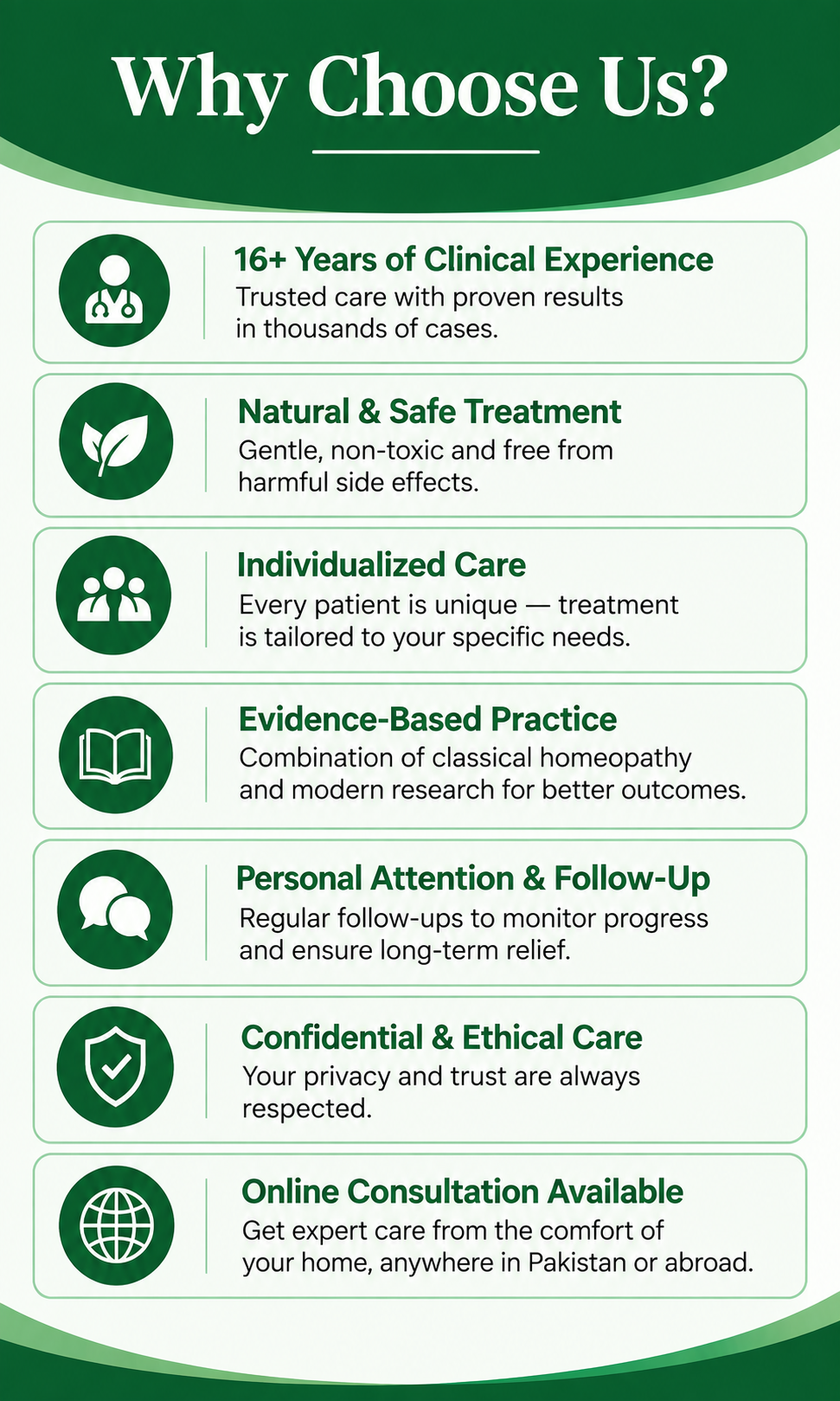
Yes. Online consultations are available for patients who cannot conveniently visit the clinic, including patients living outside Lahore or outside Pakistan. Relevant medical reports and treatment history can also be shared when appropriate.
Emergency symptoms and serious medical conditions require prompt medical assessment and should not be managed by delaying appropriate medical care. Homeopathic consultation should never be used as a reason to postpone emergency treatment or necessary medical evaluation.
Reality:
Homeopathic consultation is sought for both acute and long-standing health concerns. However, the suitability of any approach depends on the individual case, the nature and severity of the condition, and whether appropriate medical evaluation or treatment is also required.
Reality:
“Natural” does not automatically mean safe. Homeopathic products can vary considerably in their ingredients, dilution, manufacturing quality, and formulation. Some products marketed as homeopathic have been found to contain measurable active ingredients and may carry safety risks.
The responsible approach is individualized treatment, appropriate dosing, quality products, and proper professional guidance
Reality:
There is no universal timeline for any treatment. The response may vary according to the condition, its duration, the individual’s health, previous treatment, and other factors. Acute and chronic cases should not be expected to follow the same pattern.
A responsible practitioner should assess progress rather than promise a fixed recovery time.
Reality:
Classical Homeopathy focuses on the individual rather than relying solely on the disease name. The case may include the patient’s symptoms, their pattern, history, physical and emotional characteristics, previous treatment, and other relevant factors before a prescription is considered.
Reality:
Not every product labeled “homeopathic” has the same composition or degree of dilution. Regulatory authorities have reported concerns involving products containing measurable amounts of active ingredients, contamination, incorrect dilutions, or potentially toxic substances.
This is why patients should know exactly what they are taking and obtain products from reliable sources.
Reality:
This is an unsafe assumption. Homeopathic care should not be used as a reason to delay emergency care, diagnostic evaluation, vaccination, surgery when indicated, or other necessary medical treatment. Patients should also discuss complementary treatments with their healthcare professionals.
Good healthcare is not about rejecting one system, it is about making informed decisions for the patient’s wellbeing.
Reality:
No responsible healthcare practitioner can guarantee that every disease will be cured. The possibility of improvement depends on the nature, stage, duration, and underlying pathology of a condition.
Where complete recovery is not realistic, the focus should shift toward appropriate management, function, comfort, and quality of life.
Reality:
Homeopathic products can come in different forms and may contain different ingredients and dilutions. More importantly, Classical Homeopathic practice involves case assessment and individualized prescribing, rather than simply giving the same product to everyone with a particular complaint.
Reality:
You can discuss your health concerns with a homeopathic practitioner while taking other medicines, but you should provide complete information about your current treatment.
Never stop, reduce, or replace prescribed medication on your own. Any change to an established medical treatment should be discussed with the prescribing healthcare professional.
Reality:
Personal experiences can be meaningful, but one person’s experience cannot establish that a treatment will work for everyone. Individual experiences, clinical practice, and scientific evidence are different forms of information and should be considered separately.
The most responsible approach is to remain open-minded while also being honest about what is known, what is uncertain, and what requires further evaluation.